


Bloons Adventure Time TD
4.58.46K Reviews
App Specs
- Version
- 1.7.7
- Updated On
- License
- Free
- Downloads
- 10,000,000+
- Developer
- ninja kiwi
- Categories
- Strategy
- Platform
- Android
Screenshots
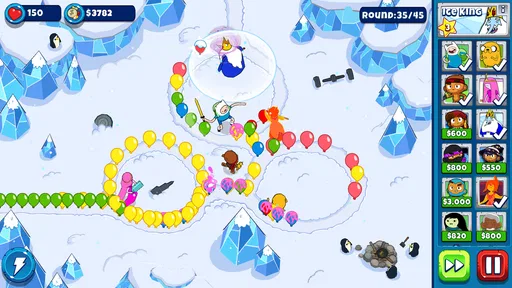
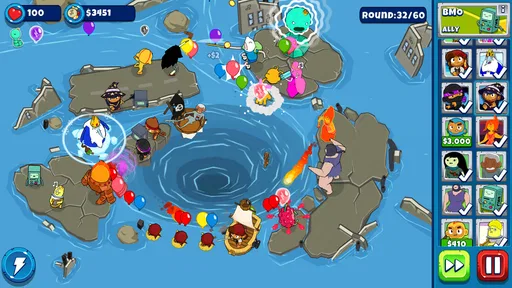
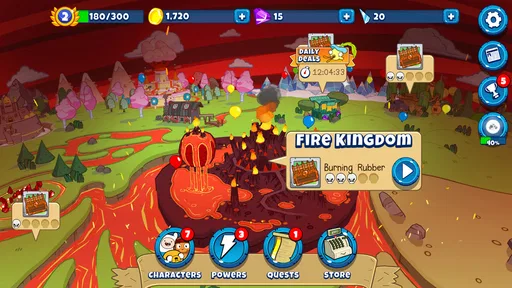
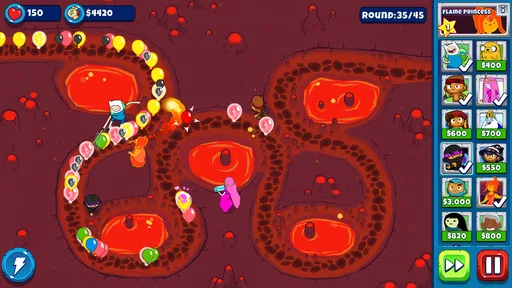
 Analysis by AppCompare
I went into Bloons Adventure Time TD expecting a light crossover built around familiar characters, but I found a surprisingly focused strategy game underneath the bright cartoon presentation. It combines the lane defense and upgrade decisions associated with the Bloons series with the world and cast of Adventure Time. The result is easy to understand at first and much more demanding once the maps begin asking me to plan several moves ahead.
It is a free strategy game from ninja kiwi, rated for Everyone, and it has passed the ten-million-install mark on mobile. Its average score sits at 4.5 from roughly 99 thousand ratings, which matches my impression that the game has broad appeal while still leaving room for debate about its monetization and long-term depth. I would recommend it to players who like short tactical sessions, character collecting, and colorful tower defense, but I would not present it as a perfect substitute for every mainline Bloons experience.
How the crossover works in actual play
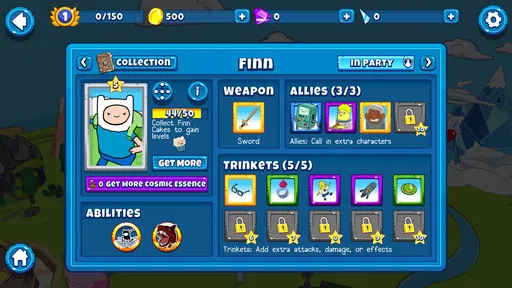
The basic goal is familiar: stop waves of Bloons before they reach the end of the route. What makes this version distinctive is the way the Adventure Time cast becomes the defensive toolkit. Instead of placing only interchangeable towers, I build a team around recognizable heroes and use their different attack patterns, positions, and upgrades to cover the map.
That change gives each round a little more personality than a standard tower-defense grid. I am not simply asking which tower has the highest damage. I am deciding which character should handle early waves, which one should receive a valuable position, and which upgrade will solve the next problem rather than merely improve the current one. The crossover works best when the characters feel like tactical choices instead of decorative skins.
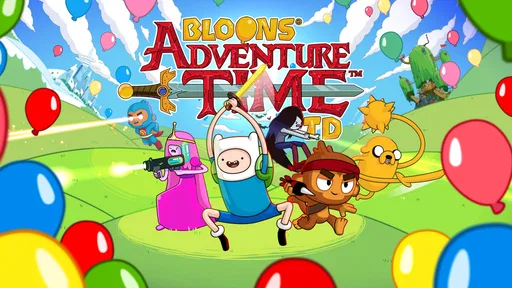
The presentation is deliberately friendly. Bright colors, expressive animations, and the Adventure Time setting make the opening stages approachable for younger players and newcomers to strategy games. At the same time, the Bloon types and wave pressure gradually punish careless placement. A cheerful visual style does not mean every level is casual, especially when several threats arrive close together and a weak defensive plan starts collapsing.
I found the game most enjoyable when I treated each map as a small puzzle. The first attempt is often about learning the route and identifying where the pressure comes from. A replay then becomes more interesting because I can place a character earlier, save currency for a more appropriate upgrade, or use an ability at a better moment. That loop gives the game more staying power than a simple “place units and wait” design.
A good entry point for mobile strategy
On a phone, the controls are straightforward. Tapping a character or position, choosing an upgrade, and activating an ability all feel natural for a touchscreen. I did not need a long tutorial to understand the main rhythm. The interface keeps the important decisions visible without turning the screen into a wall of menus.
Worth Reading Before You Choose

Flipboard Shows What News Apps Must Do Beyond the Feed

Switching to Android Auto Means Rethinking Your Driving Routine

Google Calendar Makes a Crowded Week Easier to Manage

Ludo King Makes the Most of the Minutes Between Plans

Baby Panda World Brings Quick Play to Modern Phones, but Its Game Library Feels Busy

ESPN’s Live Game View Makes Following Close Games Easier
That accessibility matters because tower defense can become intimidating when every unit has several branches and every wave demands exact knowledge. Here, the Adventure Time theme softens the learning curve. I can experiment without feeling that I am studying a spreadsheet, yet the game still rewards players who pay attention to range, timing, and the order in which upgrades are purchased.
A realistic use case is a short evening session when I have ten or fifteen minutes free. I can start a map, make a few meaningful decisions, and stop after a failed attempt without needing a large uninterrupted block of time. It also works well for a younger player and an adult sharing a device: one person can enjoy the characters while the other explains why placing a defender near a bend is more valuable than putting it in an open stretch.
However, the same simplicity can feel limiting if I want a highly technical simulation. Players who prefer the exacting optimization of the most complex Bloons titles may find this crossover more guided and less granular. Its strength is the combination of character flavor and approachable tactics, not endless mechanical complexity.
What the current version tells me
The current version is 1.7.7, and the game originally arrived on August 28, 2018. That history is useful context: this is not a brand-new experiment still proving its basic identity. It has had time to establish its presentation, progression structure, and crossover appeal. I approached it as an established mobile game rather than a freshly released product that might change its direction overnight.
For someone installing it today, the practical question is whether the existing package still feels coherent. In my experience, it does. The central loop remains easy to grasp, the Adventure Time identity is present in the characters and atmosphere, and the strategic layer is strong enough to support replaying stages. The version number is a sign of the product’s current state, not a promise of a particular future roadmap, so I would judge it by what is playable now rather than by expecting a major upcoming transformation.
The game’s evolution is most visible in its maturity as a complete crossover concept. It does not feel like a generic tower-defense template with a cartoon label attached. The characters influence how I think about a defense, and the maps give me reasons to adjust my approach. That is the important development for existing users: the game’s identity is already clear, so returning players know what kind of experience they are coming back to.
At the same time, I would avoid reading too much into the version number alone. A later version does not automatically mean that every balance issue or progression concern has disappeared. My recommendation is to install it for the established gameplay and theme, not because the number suggests a specific feature or future update.
Progression, upgrades, and the decisions that matter
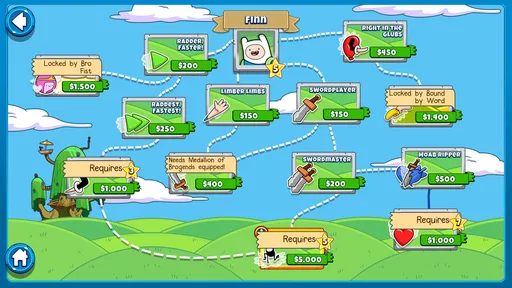
The most useful habit I developed was to stop spending resources simply because an upgrade was available. Early improvements can make a round feel safer, but saving for a capability that answers the next Bloon threat is often more valuable. A cheap upgrade that helps with ordinary waves may be less important than preparing for a tougher enemy type or a sudden increase in speed.
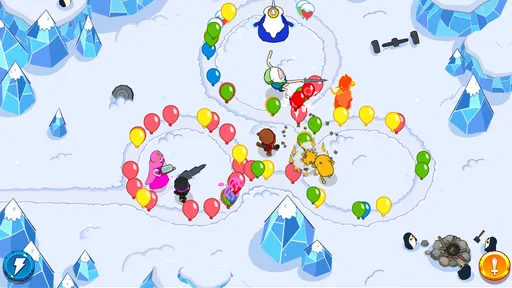
Placement deserves equal attention. A character with a strong attack can still underperform if positioned where its range covers only a small part of the route. Bends, long straight sections, and places where several paths overlap naturally create more opportunities for repeated attacks. I began looking for positions that let one unit contribute across multiple waves instead of judging a spot by how powerful it looked during the first few seconds.
Another practical tip is to use abilities as planned tools rather than emergency buttons. Saving every ability until the screen is nearly lost can waste their value. In many rounds, the better approach is to activate one shortly before the pressure peaks, preserving the rest for a second dangerous moment. This is especially helpful when a map seems easy at first and then produces a sudden combination of fast or durable Bloons.
I also recommend replaying a successful level with a different team arrangement when the game starts to feel predictable. A familiar map becomes a testing ground: one attempt can prioritize reliable coverage, while another can emphasize a character with a more specialized role. That kind of self-imposed experimentation is where the crossover’s roster becomes more interesting than simply following the first strategy that works.
There is a trade-off here. Experimentation can be rewarding, but players who want every choice to be immediately obvious may feel uncertain about where to invest. The game teaches through results more than through lengthy explanations. If a plan fails, I usually learn from the location of the failure: a missed coverage area, an upgrade purchased too late, or an ability held for a moment that never came.
Free access and the question of spending
The game is free to download, with optional in-app purchases ranging from $0.99 to $99.99 per item. That range makes the spending model relevant before I recommend it to a child or to anyone trying to keep a strict entertainment budget. I can enjoy the core strategy without treating a purchase as the reason to install the game, but the presence of optional spending means I would still use the appropriate device controls for younger players.
My advice is to decide in advance whether purchases are part of the experience you want. If the goal is a free casual game, approach the store as something separate from the tactical loop and do not let a difficult stage turn into an impulse purchase. If you enjoy collecting and want to support the game, set a personal limit first. The important distinction is that spending should remain a choice, not the answer to every frustrating map.
This is also where the game differs from a premium, one-time tower-defense title. A paid alternative may feel cleaner for someone who dislikes any in-app purchase framework, even if it has fewer crossover characters or a smaller content structure. On the other hand, a free download lowers the barrier to trying this one, which is valuable when the main attraction is seeing whether the Adventure Time cast makes the strategy more enjoyable for you.
I would be especially cautious about recommending it to a player who wants a completely frictionless, purchase-free experience for long sessions. The tactical gameplay is the reason to stay, but the broader mobile structure can still affect how relaxed the experience feels. That is not a deal-breaker for me, though it is a genuine consideration rather than something to ignore.
Where it stands beside other tower-defense games
Compared with a conventional tower-defense game, this title has a stronger personality. The Adventure Time setting gives the roster emotional familiarity, and the crossover makes unit selection feel more like assembling a team than filling slots with anonymous defenses. If you already enjoy Finn, Jake, and the wider Ooo setting, that connection can make retries feel less repetitive.
Compared with the larger and more mechanically demanding Bloons experiences, this version feels more compact and character-driven. I would choose it when I want a lighter presentation and a crossover hook. I would choose a more traditional entry when I want to spend a long time refining exact tower combinations, studying deep systems, or chasing a more purely competitive form of optimization.
It also differs from many casual defense games because failure is informative. A lost round is not always a sign that I need more raw power. Sometimes I used the right characters in the wrong places, upgraded in the wrong order, or ignored how the route shaped their usefulness. That gives the game a better strategic backbone than titles where success mostly comes from repeating the same placement pattern.
Still, the crossover can be a weakness for players who do not care about Adventure Time. Without that attachment, some of the charm disappears, and the remaining tower-defense structure may not be enough to beat a favorite specialist game. I would not recommend it solely because it belongs to the strategy category; I would recommend it when the theme and the mobile-friendly tactical loop appeal together.
Who should install it, and who should skip it
I think it is a strong choice for fans of Adventure Time who want more than a passive character showcase. It is also suitable for a player new to strategy games, because the rules are readable and the colorful cast makes the first steps less intimidating. Families should appreciate the Everyone content rating, while still remembering that optional purchases deserve supervision on a shared device.
It suits people who enjoy improving through retries. If you like looking at a failed defense and asking what one decision caused the collapse, there is enough here to keep you engaged. It is also a good fit for commuters, students between tasks, or anyone who prefers mobile games that can be played in compact bursts rather than requiring a long campaign session every time.
I would skip it if your priority is a premium game with no purchase prompts, or if you want a serious competitive strategy environment where every system is built for maximum depth. I would also hesitate to suggest it to someone who has no interest in the crossover and already owns a tower-defense game whose mechanics they find more satisfying. Familiar characters cannot compensate for a tactical style that does not match your preferences.
One more point is worth mentioning for returning players: the game’s value depends on whether you enjoy revisiting maps with improved judgment. If you only want a constant stream of unfamiliar stages and rarely replay anything, the strategic loop may feel less generous. If you enjoy refining a route, trying a different team, and turning a near-loss into a clean victory, the same structure becomes a benefit.
What I would watch before committing long term
For new players, I would watch how quickly the initial novelty turns into genuine strategic interest. The first attraction is clearly the crossover, but the lasting test is whether the maps make you think differently from one attempt to the next. If you find yourself changing placement and upgrade timing rather than repeating a routine, the game is doing its job.
Existing users should pay attention to balance and variety in their own play experience. A healthy return loop is one where familiar characters still invite experimentation and a difficult stage can be solved through better planning, not only through waiting or spending. I would also watch how the current version feels on your device, especially if you are installing on older hardware that meets the minimum requirement of Android 5.0.
The developer is ninja kiwi, a name closely associated with the Bloons style of tower defense, and that background sets a reasonable expectation for the core genre mechanics. Even so, this crossover should be judged on its own priorities. It is not trying to replace every other game in the series; it is offering a more character-led route into the same broad strategic appeal.
My final recommendation is positive, with clear conditions. Install it for the blend of Adventure Time personality and thoughtful mobile defense, not merely for the license. The free entry point makes trying it easy, the Everyone rating broadens its audience, and the established version gives it a settled feel. Just keep the optional purchases in perspective, accept that its depth is more approachable than exhaustive, and be ready to replay levels rather than expecting every victory to arrive on the first attempt.
After spending time with it, I see Bloons Adventure Time TD as a friendly but capable strategy game. Its best moments come when the cheerful world hides a real tactical question: which character belongs here, which upgrade can wait, and when should I spend an ability? For the right player, those small decisions are enough to turn a familiar crossover into a satisfying game rather than a disposable mobile tie-in.
Pros
- Combines Bloons tower defense with Adventure Time characters and humor.
- Many heroes offer different abilities
- encouraging varied team compositions.
- Short missions work well for quick mobile gaming sessions.
- Colorful cartoon visuals remain clear even during crowded battles.
- Offline play is useful when you do not have a reliable internet connection.
Cons
- Some later upgrades and characters require considerable grinding.
- The interface can feel crowded on smaller phone screens.
- Difficulty spikes may make certain stages frustrating without careful planning.
- Limited-time content and rewards can encourage repetitive daily play.
- Older devices may experience slower performance during intense waves.
FAQs for Bloons Adventure Time TD
What is Bloons Adventure Time TD?
Bloons Adventure Time TD is a tower defense game that combines the characters and humor of Adventure Time with the strategic gameplay of Bloons TD. You build teams of heroes, place towers, upgrade their abilities, and stop waves of colorful Bloons from reaching the end of each track. It includes a story campaign, multiple maps, special missions, equipment, and character abilities to experiment with.
Is Bloons Adventure Time TD free to download and play?
The game can generally be downloaded for free on supported Android and iOS devices, although availability may vary by region and store. It includes optional in-app purchases, which may provide extra content or convenience. The core tower defense experience is playable without spending money, but players should review the current store listing for pricing, supported devices, age ratings, and any changes to the purchase system before installing.
Does Bloons Adventure Time TD require an internet connection?
An internet connection may be needed for downloading the game, receiving updates, validating certain content, or using store-related features. Much of the main gameplay can usually be enjoyed offline once the necessary files are installed, but this may depend on the device and version. If you plan to play while traveling, it is best to test offline access beforehand rather than assuming every feature will work without connectivity.
What kind of gameplay and characters are included?
The game offers familiar Adventure Time heroes such as Finn, Jake, Princess Bubblegum, Marceline, and other characters, each with different strengths and abilities. You combine them with towers and upgrades to handle fast, armored, flying, or heavily protected Bloons. Progress involves choosing effective placements, managing limited resources, completing objectives, and adapting your team to different maps and challenge conditions.
Is Bloons Adventure Time TD suitable for children and casual players?
Bloons Adventure Time TD is approachable for casual players because its controls are simple and the early levels introduce the mechanics gradually. However, later stages require more planning, careful tower placement, and efficient upgrades. The cartoon presentation is family-friendly, but parents should still check the current age rating, advertising details, and in-app purchase options on the relevant app store before allowing children to download it.


